
 Tiếng Việt

From a technical training institution founded in 1956, Industrial University of Ho Chi Minh City (IUH) has grown into a large-scale university—progressively elevating training standards, advancing scientific research, expanding international cooperation, and creating broader opportunities for students to engage with the world.
Seven Decades of Breakthroughs in Scale and Quality
In 1956, in the former Go Vap District of Ho Chi Minh City, Go Vap Vocational School was established with the mission of training technical personnel. From that foundation, the institution underwent multiple renamings, structural transitions, and expansions before becoming Industrial University of Ho Chi Minh City (IUH).
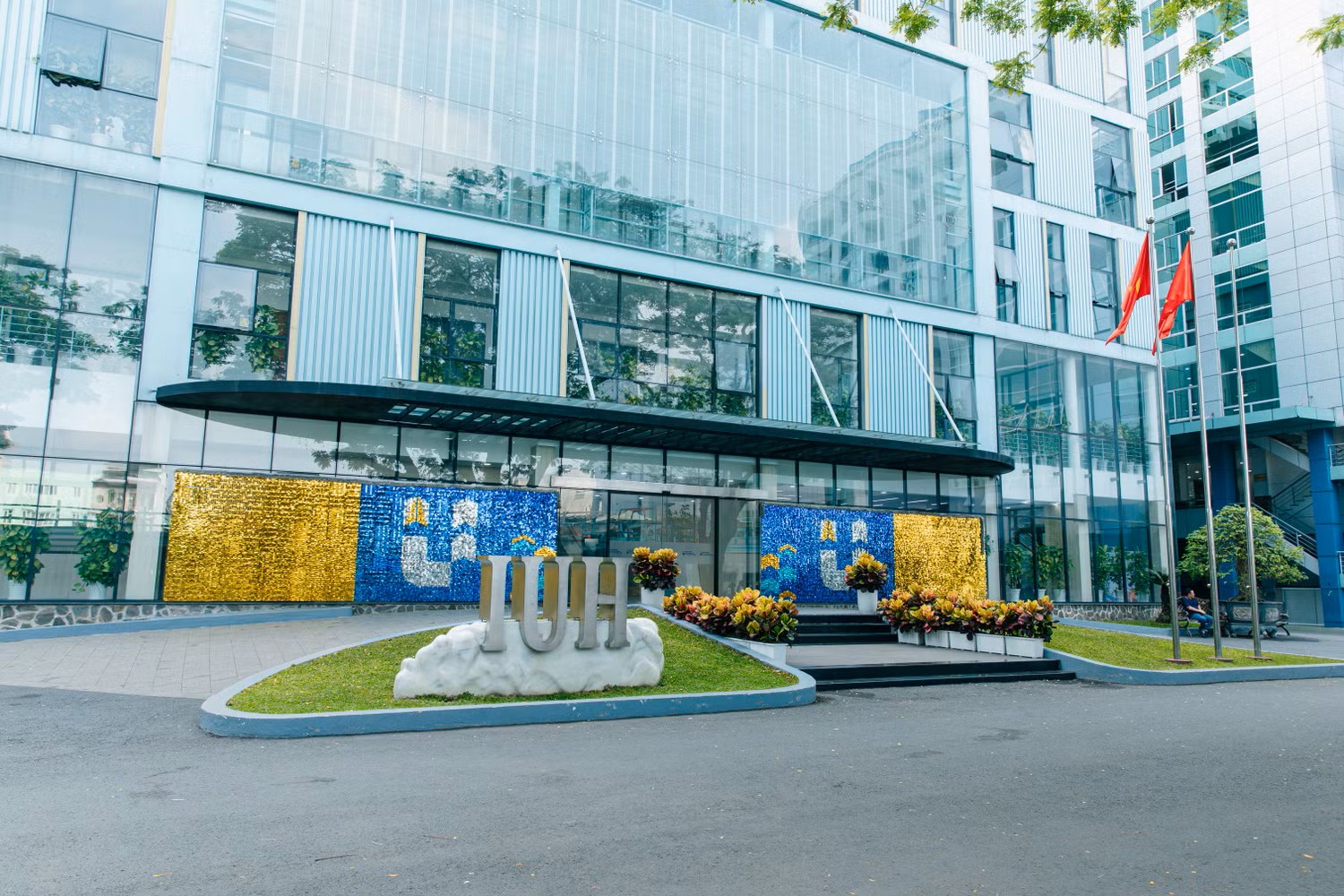
Industrial University of Ho Chi Minh City. Photo: Provided by IUH.
Reflecting on this journey, Assoc. Prof. Dr. Phan Hong Hai — Secretary of the Party Committee and President of Industrial University of Ho Chi Minh City — noted that each stage of the University’s development has been closely aligned with societal demands and national workforce needs. Starting as a vocational school with only a few hundred learners, IUH steadily broadened its academic disciplines, strengthened its faculty, invested in facilities, and transitioned to a multidisciplinary university model.
IUH’s transformation did not occur overnight, but through cumulative progress across generations. Today’s achievements rest on a legacy of technical rigor, discipline, and professional practice forged from the earliest days. From classrooms of several hundred students, IUH has expanded into a university serving more than 40,000 students across 16 faculties, 4 institutes, and over 60 academic programs. In the 2026–2027 academic year alone, the University welcomed more than 12,000 incoming Cohort 22 freshmen.
In recent years, IUH’s growth has been marked by major milestones in educational quality and international integration. Expanding enrollment has gone hand in hand with higher expectations for curriculum standardization, university governance, scientific research, and student learning experiences.
To date, IUH has 46 academic programs accredited both domestically and internationally. In 2023, the University achieved Cycle 2 institutional accreditation under the regulations of the Ministry of Education and Training; in 2025, it earned institutional accreditation under AUN-QA standards. In June 2026, IUH achieved QAA institutional accreditation from the United Kingdom, meeting all 10 out of 10 European Standards and Guidelines for Quality Assurance in Higher Education.
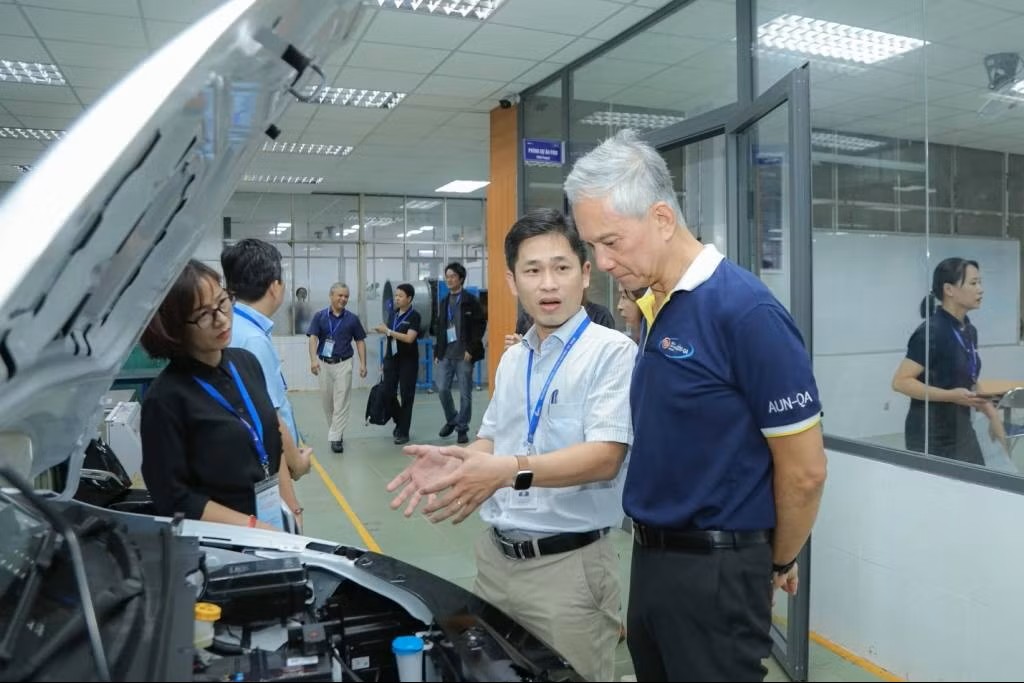
The AUN-QA external assessment team touring modern, integrated facilities and laboratories at Industrial University of Ho Chi Minh City. Photo: Provided by IUH.
Commenting on this milestone, Dr. Nguyen Huy Phuc — Head of the Office of Testing and Quality Assurance at Industrial University of Ho Chi Minh City — emphasized: “Consecutively achieving prestigious domestic and international accreditations such as AUN-QA and the UK’s QAA standard is not merely about earning titles; it demonstrates IUH’s commitment to comprehensively standardizing every educational activity and bringing the University’s training quality closer to advanced regional and global higher education benchmarks.”
These accreditation achievements are also reflected in international university rankings. In the QS World University Rankings: Asia 2026, IUH ranked 355th in Asia and 73rd in Southeast Asia; QS Stars 2026 reaffirmed its 4-star rating with 817 out of 1,000 points, an increase of 131 points from the previous cycle. Notably, 7 out of 9 categories earned 5-star ratings: Research, Employability, Facilities, Specialist Criteria / Programme Strength, Governance, Environmental Impact, and Global Engagement.
President Phan Hong Hai views these achievements as pivotal milestones in IUH’s transformation, while also setting higher expectations for the entire university community. According to Assoc. Prof. Phan Hong Hai, what matters most is not merely attaining a standard or ranking, but sustaining quality and driving meaningful improvements in teaching, research, and student support.
From Expanding Partnerships to International Academic Spaces
Internationalization at IUH has been built over many years through partnerships with universities and research institutes, student exchanges, joint research, and international academic forums. In recent years, these initiatives have increasingly integrated with teaching and research, creating expanded learning and exchange opportunities for students.
International research performance has also advanced substantially. From 2019 to 2023, IUH recorded 2,428 Scopus-indexed publications; during 2019–2024, IUH scholarly works received 22,985 citations, achieving an International Research Network score of 42.1. Partnerships have expanded across Japan, South Korea, Taiwan (China), Europe, North America, and many other countries, steadily progressing from memoranda of understanding to concrete joint activities.
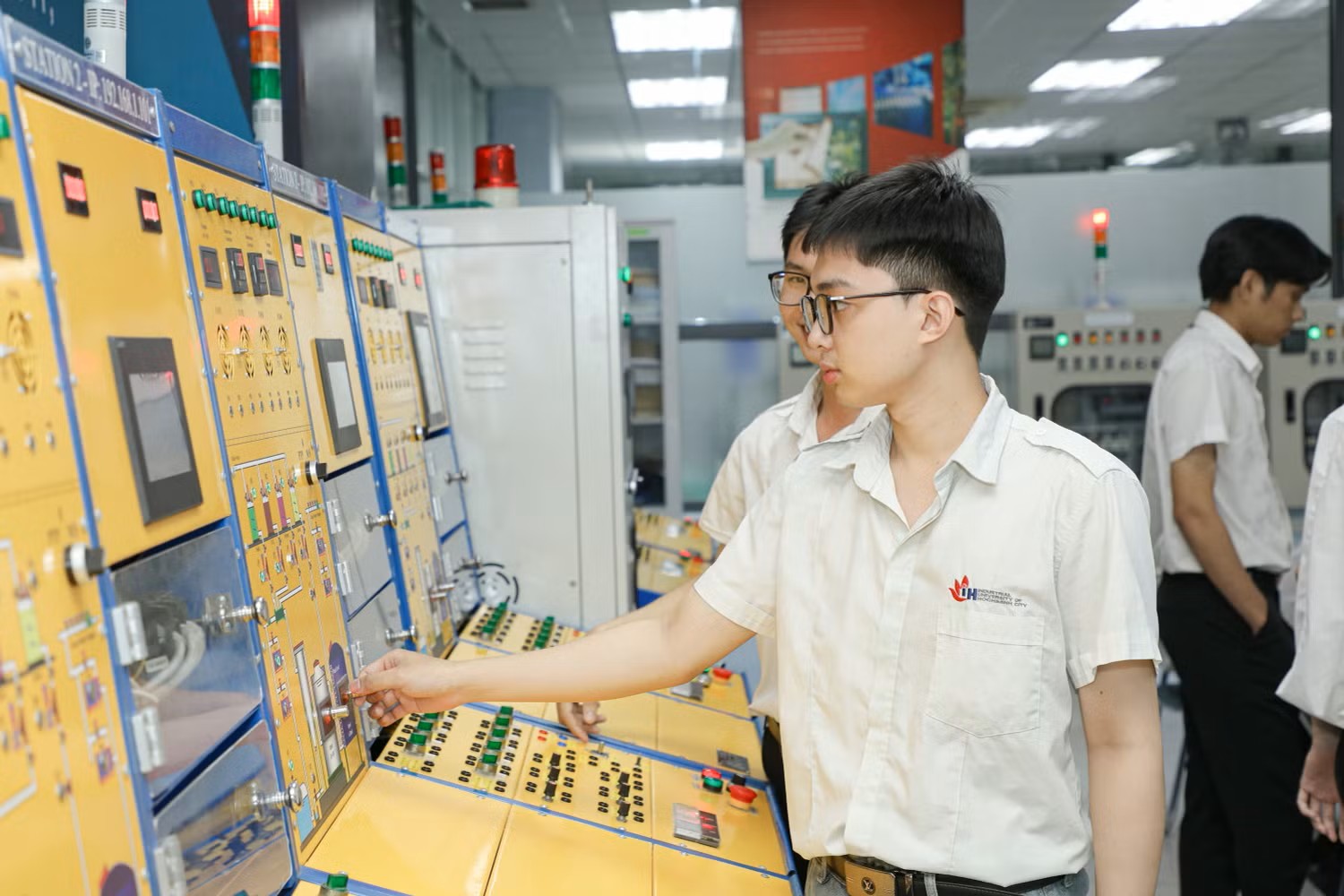
From a vocational school with a few hundred students, IUH progressively expanded academic fields, upgraded faculty, invested in infrastructure, and transitioned into a multidisciplinary university. Photo: Provided by IUH.
In 2026 alone, Industrial University of Ho Chi Minh City hosted and participated in numerous international academic events. The ICTE 2026 conference attracted delegates from 29 countries, featuring 244 abstracts by 480 authors. Students also gained greater opportunities to conduct research, participate in academic exchanges, and compete internationally, bringing them closer to global academic and professional environments.
These developments reflect that IUH’s progress lies not only in expanding scale, but also in elevating educational and research quality and fostering a learning environment increasingly connected to the region and the world.
New Space for the Next Chapter
Entering its 70th year, IUH continues expanding resources for the next stage of development. On September 25, 2026, the University assumed management in full of the Southern Regional Branch Campus at Hamlet 7, An Phuoc Commune, Dong Nai Province, pursuant to Decision No. 323/QD-MTTW-BTT dated September 17, 2026 of the Standing Committee of the Central Committee of the Vietnam Fatherland Front. All public assets and legal documentation were transferred to IUH for management and utilization in accordance with regulations.
The new campus adds valuable space for academic instruction, operational expansion, and national defense and security education programs. The University will continue reviewing, organizing, and planning effective utilization aligned with students’ academic and training needs.
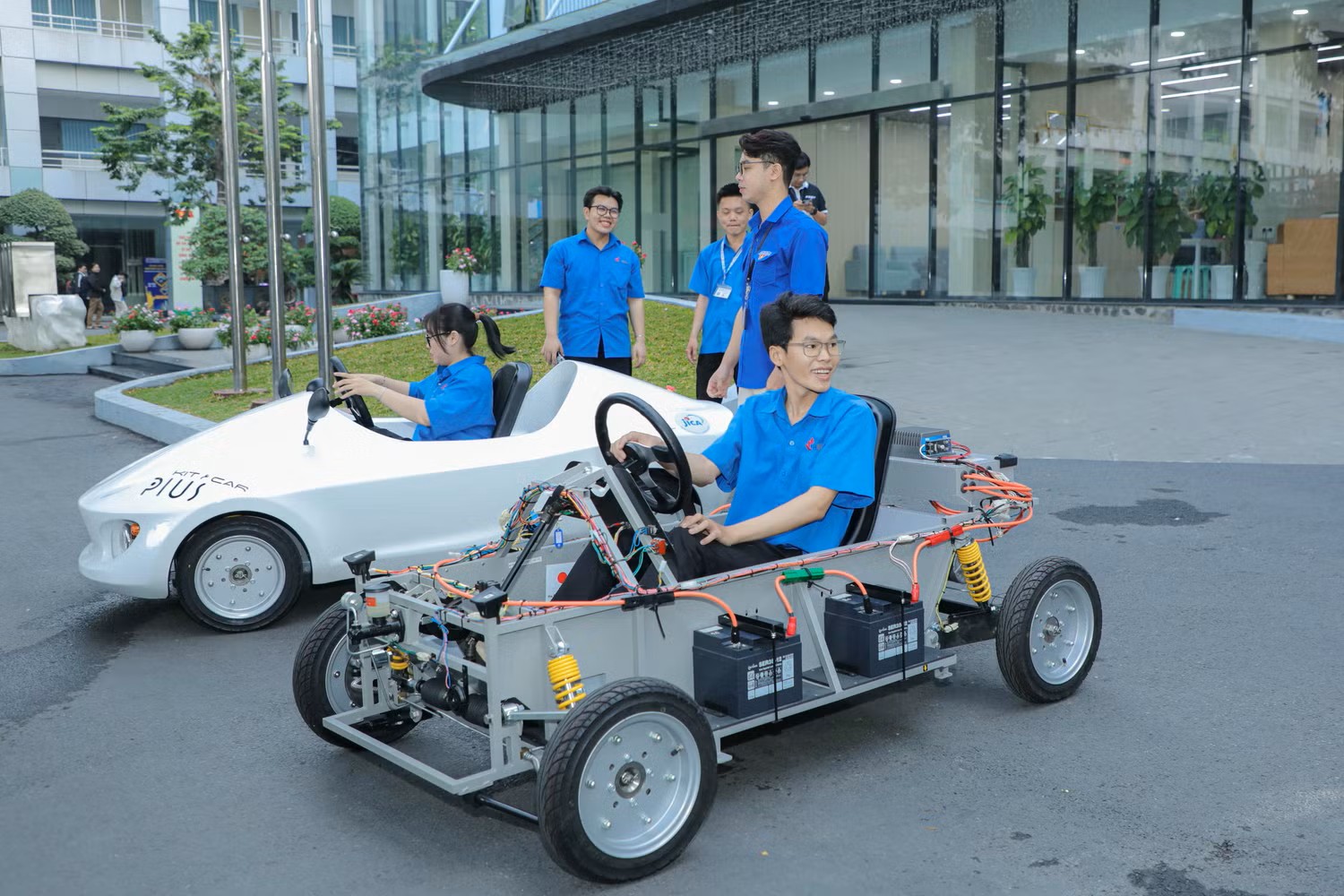
Students from the Faculty of Automotive Technology, Industrial University of Ho Chi Minh City gaining hands-on experience with an electric vehicle under the PIUS project. Photo: Provided by IUH.
For Assoc. Prof. Dr. Phan Hong Hai, the road ahead brings new demands as IUH enters a phase of larger scale, higher quality standards, and deeper global integration. Seventy years of accomplishments form both a solid foundation and a launching pad for continued innovation.
From a few hundred learners in its earliest days to over 40,000 students today; from technical training to 46 accredited programs; from initial partnerships to an expanding international research and cooperation network, IUH’s 70-year journey is reflected in continuous growth in scale, quality, and developmental reach.
Behind these numbers stand generations of faculty, staff, students, and alumni who have shaped IUH today. Stepping into its 70th year, IUH’s story is not simply about reflecting on the past, but about meeting new expectations for teaching, research, governance, and global integration as a university increasingly connected with the region and the world.